
The next harvest period for DNR-managed commercial wild stock geoducks begins tomorrow.

From April 1 through June 5, harvests will take place in select “tracts” in the Puget Sound harvest region. If you are on or near the water in these tract areas, you may wonder what’s up. Here’s the scoop:
What tracts are open this harvest period?
- Dungeness West Tract #00320, east of Dungeness Spit. (April 1 – June 5)
- Langley North Tract # 03550, north of the town of Langley, on Whidbey Island. (April 21 – May 2)
- Still Harbor Tract #12750, northeast side of McNeil Island. (May 12 – June 5)
How are wild stock geoducks harvested? Divers use hand-operated water jets to loosen the sediment around a geoduck and remove them by hand from state-owned aquatic lands. Harvests take place in sub-tidal areas between minus 18 and minus 70 feet.
What times are harvesters allowed to operate? Wild stock geoduck harvest hours are weekdays only, between 8 a.m. and 4 p.m. Harvesting is not allowed on weekends or state holidays. Also, during this harvest period, operations will be closed April 7 – 11 due to scheduled training for DNR personnel.
How do I recognize a legitimate commercial geoduck harvest boat?
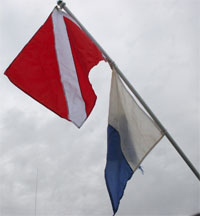
Commercial vessels will have numbers in block letters affixed to the side of the wheelhouse or flying bridge. In addition, vessels will fly a diver-down flag or alpha flag.
What about tribal geoduck harvesting? Tribal geoduck harvests operate on a different schedule from DNR commercial harvests. Puget Sound Treaty Tribes have a 50/50 share in the harvest. Tribal harvest may occur on the same DNR tracts as well as on tracts specifically identified for tribal harvests. Tribal harvest can also occur on weekends and holidays. You may see tribal enforcement boats or DNR compliance vessels on scene during harvest operations.
What if I suspect illegal geoduck harvest activity?

If you see harvest activity taking place outside of the hours of operation or in areas not identified as geoduck tracts for this harvest period and you don’t think it’s a tribal fishery, please report this activity. More information about reporting suspected poaching is on the Washington Department of Fish and Wildlife’s website.
What happens to revenue from geoducks? The state sells the right to harvest wild stock native geoducks at public auctions several times a year. Revenue generated from these auctions benefits the state of Washington in a number of ways. Half of the revenue goes into the Aquatic Lands Enhancement Account (ALEA) to develop public access to state-owned aquatic lands and to restore native aquatic habitat. The other half of the revenue generated pays for management and protection of these lands. From 2006-2012, annual geoduck revenues averaged $18 million for the state of Washington.
More detailed information about quotas and harvest ceilings (the maximum amount of pounds that can be removed) are in the invitation to bid packet.
Learn more about DNR’s Wildstock Geoduck Program.
For more information about DNR’s Wild Stock Geoduck Program, contact Todd Palzer at 360-902-1864.
