
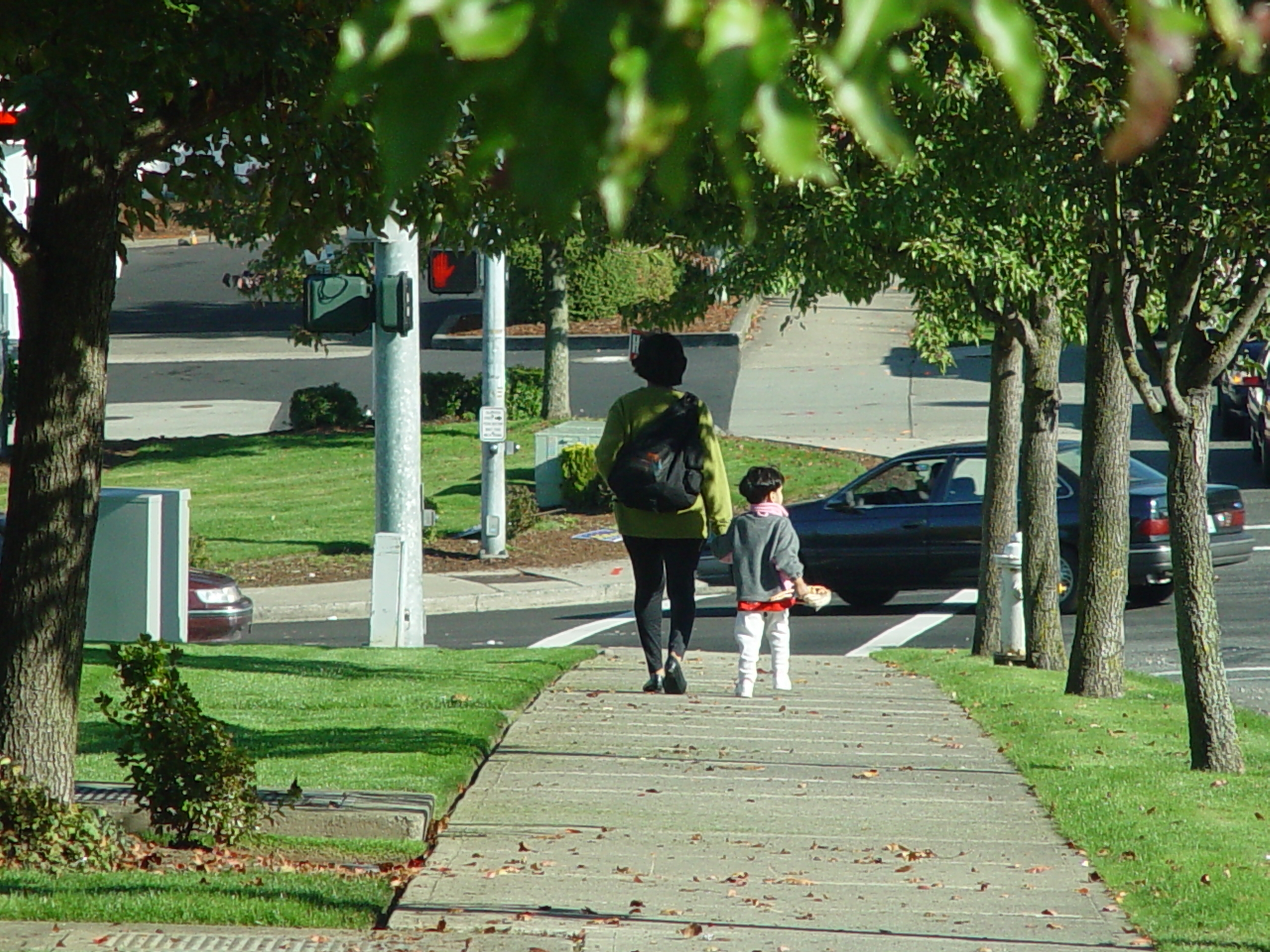
Of course, urban trees save energy. However, in order to keep them healthy, we need to know how they are adapting to climate change and other issues.
At no cost to the state, the Washington State Department of Natural Resources’ Urban and Community Forestry Program is participating in research that will help city planners make better decisions about the management of urban trees. Funding is from the American Recovery and Reinvestment Act of 2009, made available through the U.S. Forest Service.
This is the first joint effort of its kind in the Pacific states to gather data on the health of urban forests in cities around Alaska, California, Hawaii, Oregon and Washington. This research, led by U.S. Forest Service scientists, will take place at approximately 1,000 sites in these states.
The data will be compiled for a comparative study on the health of trees in urban areas. This research will give us a baseline of the current health of urban forests in the Pacific Coast states. The results of this research will be used to evaluate questions about the potential reduction of energy needs, such as trees cooling the urban environment, the contribution of urban trees to carbon sequestration, water management within urban areas, and quality of life for urban residents. Data collection is expected to be completed in 2012.
There is little doubt that urban forests will change as the climate changes. Over the longer term, monitoring will help to determine if and how urban forests are adapting to changing conditions and will shed some light on possible improvements. The data from this project will help communities develop urban forest management plans that address the impacts of climate change on their urban forest resources.
The project is being carried out in collaboration with the Oregon Department of Forestry, California Polytechnic State University, California Department of Forestry and Fire Protection, Washington Department of Natural Resources, Alaska Department of Natural Resources and the Hawaii Urban Forestry Council.
| Follow DNR on: |  |
 |
 |
 |
 |
 |
