
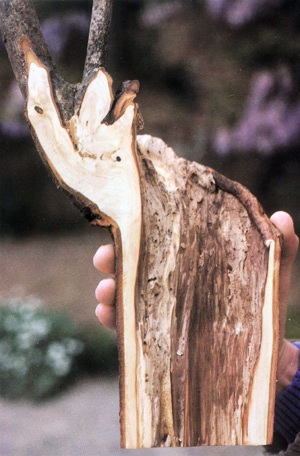
Don’t be fooled that topping can revive or improve the health of a tree. It’s just not true. Tree topping should never be confused with proper pruning.
Topping is defined as severely and indiscriminately cutting back or removing large branches in a mature tree. Research has taught us that good pruning techniques work with the tree’s biology, not against it. Topping a tree removes its ability to feed itself; it does not help a declining tree recover.
Pruning, the cutting and removing of branches or parts of trees, is a preventative or corrective measure to remove dead branches, crowded or rubbing limbs, eliminate hazards, and increase light and air penetration. Since each cut to a tree has the potential to change the way it grows, it is important to educate yourself. No branch should be removed without a good reason.
Topping alters tree’s physiology
For example, when a stem of a plant is cut, it alters the physiology of that plant. By removing a stem tip from the plant, it induces branching by releasing apical dominance. (Apical dominance is the phenomenon whereby the main central stem of the plant grows more strongly than other side stems.) So pruning is not about what is removed, but what happens to what is left on the plant. Thus, proper pruning is designed to provide proper branching on the plant… not to control its size or shape.
When large branches are indiscriminately removed from a tree, it disrupts the tree’s ability to produce the energy-making leaves that it needs to survive and thrive. Topping leaves behind wounds that open the door to decay organisms.
Often a topped tree will respond to its injuries by putting on a tremendous amount of branch growth to make up for the loss of its food-making branches. As a result, a tree may appear fuller and denser; however this “flush” of growth forces the tree to tap into its energy reserves and the tree becomes stressed, weakened and susceptible to insect and disease attack. Rather than invigorating a tree, if a tree survives topping, the result is that it remains in a weakened state with a greatly reduced life span.
When trees are properly pruned, their natural shape remains intact along with their health and vigor. The International Society of Arboriculture has suggested techniques on how to prune trees properly. If you have a large tree that you think needs to be pruned, consult a certified arborist. He or she will be able to plot a course of action that may involve pruning, but never topping.
Remember: Think before you plant. Assess a site to understand the type of soil, amount of space, light and moisture available to a tree. Select a tree that will live and thrive in those conditions by researching tree size and maintenance requirements before you select the perfect one for your yard. To learn the right techniques for planting a tree, see Urban and Community Forestry’s publication called Proper Planting Begins Below Ground.
You can test your tree knowledge with Plant Amnesty’s Tree Biology Pop Quiz.
For more information on tree care, go to DNR’s Urban and Community Forestry Program web page.
| Follow DNR on: |  |
 |
 |
 |
 |
 |
