
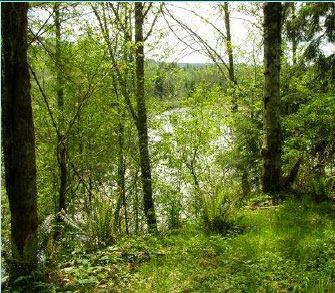
It will certainly not be the biggest parcel that the state has ever purchased. But an 80-acre property about nine miles northeast of Monroe (and 15 miles east of Everett) — approved for purchase yesterday by the state Board of Natural Resources — is a fitting example of DNR’s strategy to keep working forests in production. By keeping these lands in forestry as state trust lands, they will never be developed into housing or other nonforestry uses.
The plot of land is bordered on three sides by state trust land already managed by DNR. On the fourth side, it borders land owned by the City of Everett as part of the watershed for nearby Lake Chaplain — a source of the City’s drinking water. With ready access via a county-maintained road and a utility easement, the private parcel could have been developed by its owners into homesites.
DNR’s strategy is to look for logical additions to existing state forestland and to target lands that are at-risk of development, also known as conversion, into nonforestry uses. Working under a legislative proviso DNR can selectively pay more than the forestry value of these lands to prevent their conversion. About 67 acres at this location are classified as site class II forestland, some of the best around. The remaining 13 acres are wetlands, streamside lands and other land. As part of a state trust forestland holding now, this parcel will be accessible to the public, managed for sustainable, natural resources under DNR’s Habitat Conservation Plan, and helping keep clean water in local streams.
| Follow DNR on: |  |
 |
 |
 |
 |
 |
