
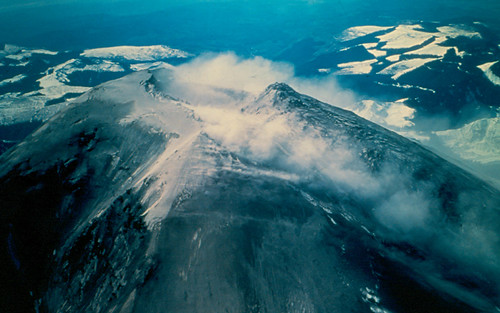
Mount St. Helens in Washington is the most active volcano in the Cascade Range. In 1980,a sudden, large landslide followed by a powerful explosive eruption created a large crater. The series of eruptions did not end until 6 years later after lava had built a dome in the crater. Next Tuesday is the 30th anniversary of the Mount St. Helen’s eruption of 1980.
DNR’s geologists were among those who worked with the U.S. Geological Survey, universities, other agencies and emergency officials following the May 18, 1980, eruption. See our Mount St. Helens information page with information and many links about volcanoes, including a link to the online book: Eruptions of Mount St. Helens: Past, Present and Future.
QUESTION: What is a Native American name for Mount St. Helens and what does it mean?
See the answer on yomorrow’s Ear to the Ground …or… see the answer now on DNR’s Facebook page (while you’re there, please “fan us” — we’ve got plenty more information about Mount St. Helens coming in the next few days.)
Yesterday’s QUIZ: What amount of rock was removed from the mountain by the eruption? ANSWER: 3.7 billion cubic yards – enough to fill 313 million large dump trucks… or so.
See more photos of Mount St. Helens before and after the May 18, 1980, eruption on DNR’s Flickr page.
 |
 |
 |
 |
 |
 |
