
Forest Health
-
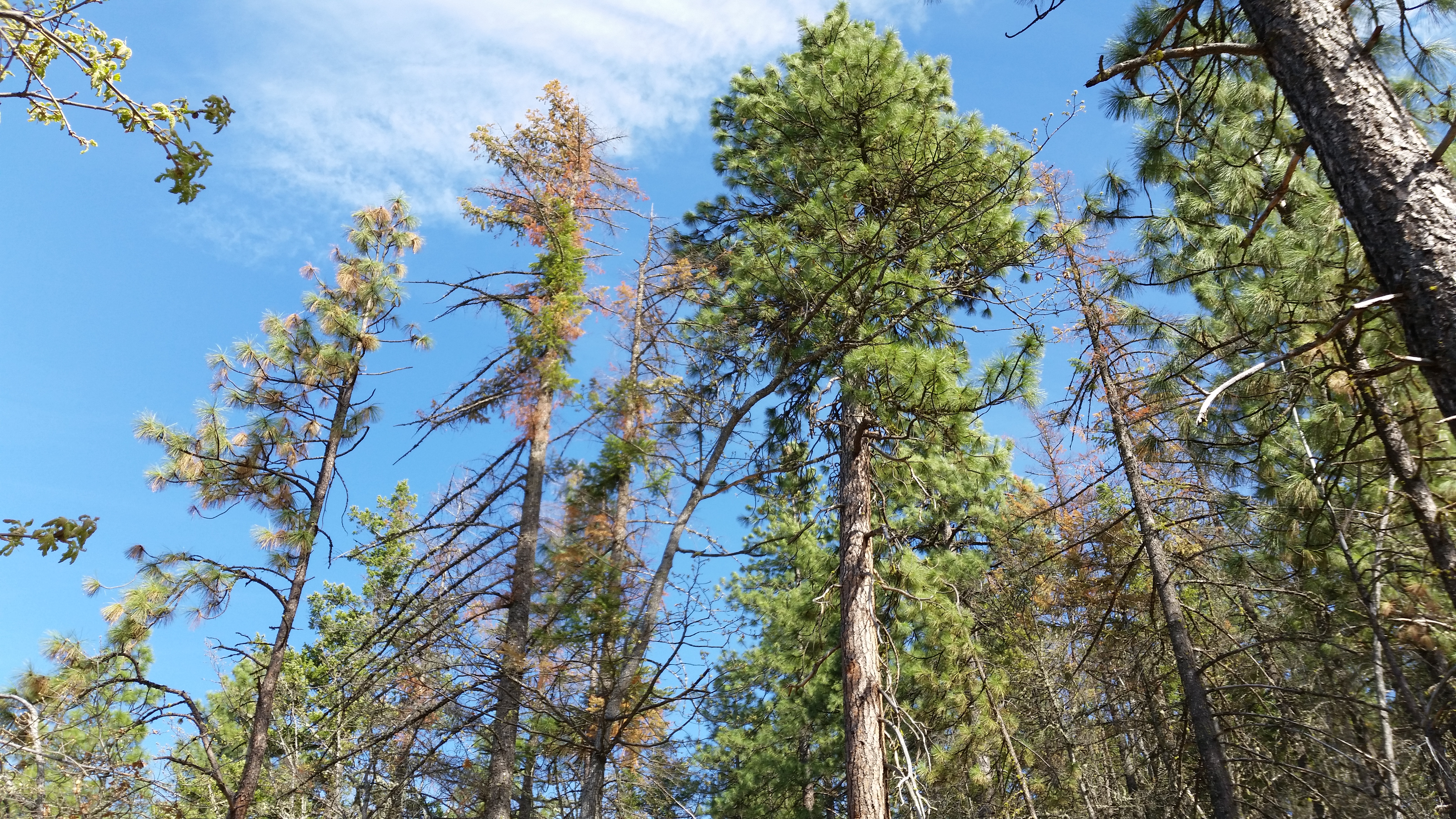
Why are more conifer trees looking shabby? It might be damage from the drought of 2015
Damage caused by last year’s severe drought is starting to show up in conifer trees across Washington state. As it does, DNR is receiving more reports of dead or damaged conifers , especially in lowland areas and sites with well-drained soils. DNR’s forest… Continue reading
-
Say hello to spring, and emerging bark beetles
Temperatures are warming up, which means the pine engraver bark beetle will once again rear its ugly little head in forests and woodlots across the state. The pine engraver beetle is tiny — between 1/8 and 3/16 of an inch long… Continue reading
-
Timely tree tips — insects and diseases can indicate other problems
Trees that are damaged, stressed, unhealthy or in decline are far more susceptible to insect infestation and diseases for two reasons: 1) Physical injuries damage a tree’s protective bark tissue, providing easy access to the tree’s core for insects and… Continue reading
-
Funding opportunity for restoring forest landscapes; deadline February 29
DNR is looking for projects that will help protect and restore forests across the diverse landscapes of Washington. Working together with the U.S. Forest Service, DNR is seeking forestland restoration grant proposals for a program called Landscape Scale Restoration Competitive… Continue reading
-
Are you a forest landowner with trees damaged by recent winter storms?
Severe November and December wind and snow storms in Spokane and other areas could be causing more damage than you realize. By this spring, you may notice little piles of reddish bark dust around your trees. This is a sign… Continue reading
-
English ivy invades Pacific Northwest forests
What’s wrong with a little ivy? Plenty. The photo with this post was taken recently in Olympic National Park, demonstrating that invasive species know no boundaries. This was only a small piece of the infestation, which was killing and pulling over… Continue reading
-
Small forest landowners: Learn how the FFFPP can help you
Are you a small forest landowner? Do the roads on your land block or damage fish habitat? The Family Forest Fish Passage Program (FFFPP) is a DNR program targeted specifically to small forest landowners. The program helps landowners eliminate structures… Continue reading
-
Beetle invasions put forests at risk of wildfire
A healthy forest is a top priority in preventing wildfire, and insects are one of the things that can threaten the health of a tree. Bark beetles, such as the mountain pine beetle, feed on the inner bark of many… Continue reading
-
Learn about the health of Washington’s forests near you
Each year, all forested acres in Washington are surveyed from the air to track recent tree damage. That’s 22.4 million acres of forestland, which you can see in this three-minute video taken from 2011. These aerial surveys are used to… Continue reading